An analysis of the US Government shut down’s effect on Air Traffic Control and what that means for the domestic aviation industry in October 2025.
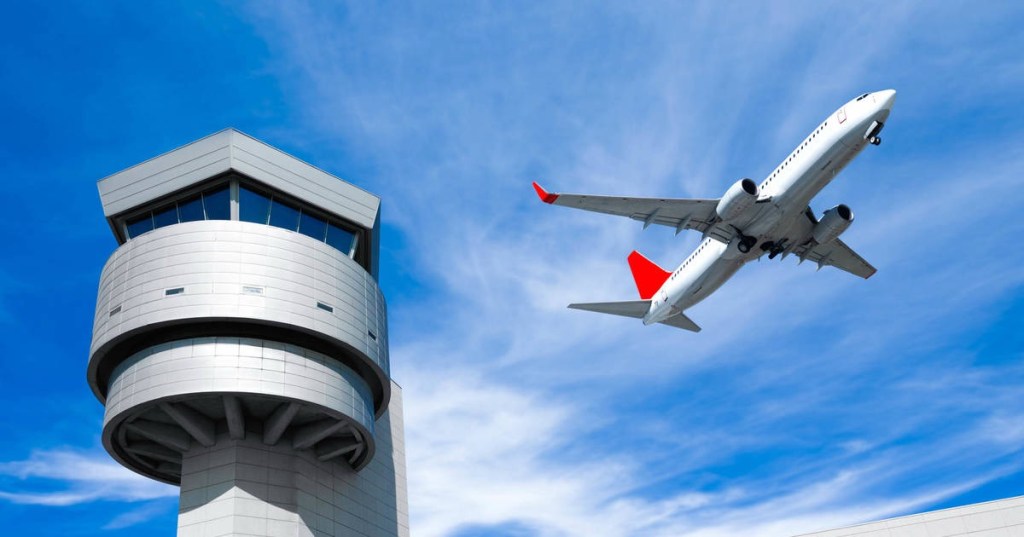
The USA Government shut down is a detriment to the aviation industry. This is because air traffic control is on the federal payroll. If there is a government shutdown, Air Traffic Control (ATC) operators will not get paid, and so cause flights to be uncoordinated and therefore unsafe to operate. Therefore, over 1,100 flights were grounded between October 1st (start of the shutdown) and November 11th. In this article, we will explore the effects in more depth and find out the real detriment to the economy and also predict how this may alter the future of the domestic aviation industry.
Firstly, it is key to understand the aviation industry’s contribution to the USA, and therefore its importance. The aviation industry contributes 5% of the USA’s GDP, the equivalent of $1.45 trillion (in 2024 according to Airlines for America). For context, that is around 1.2 times the GDP of Saudi Arabia– a remarkably wealthy nation. It is for that reason that it is important to understand the significance of the shutdown and what that means, as a result, for the industry. Overall, the aviation sector is a key contributor to the Nation’s Gross Domestic Product.
The situation has put $1 billion worth of jobs at risk, as the Infrastructure Investment and Jobs Act provided a total of $1 billion a year in job creation, according to the FAA (Federal Aviation Administration). According to Reuters, hundreds of ATC Operators have had to take on second jobs after missing their first full paychecks. They also found that roughly 13,000 ATC controllers must work without pay, and as a result, many have taken ‘sick’ leave as a method of a de-facto strike.
This begs the question; how does this affect the number of flights and revenue generated from the aviation industry?
Although international flights have not been affected, about 1,800 domestic flights, or in other terms- 268,000 seats, have been cancelled (according to Al-Jazeera news outlet). This is a result of 40 of the nation’s busiest airports being affected. This is significant because it causes major shortages, and so causes huge price surges, to the extent where airlines are making a loss, as they don’t have enough demand to fly commercial flights profitably. It is also significant because people no longer have the means to travel interstate via airlines. This would encourage other means of transport. However, this causes a great shift away from aviation and so creates a deficit.
It’s important to note that, in the grand scheme of things, the government shutdown isn’t as detrimental to the aviation as one might perceive upon first glance. A more threatening issue is the supply chain issues the industry faces, and how it could cost airlines north of $11 billion according to IATA. The other concerning issue is excess fuel costs due to older less efficient planes, which also comes with the additional maintenance costs of older engines. Overall, the most concerning issue in the long run may not be the government shutdown.
A government shutdown is, in essence, a short-run market shock, which will shift the supply curve of labour to the left significantly, especially as in these cases, the elasticity of demand for ATC operators are extremely inelastic- the core of issue lays in the shortage of ATC operators due to the government not being able to pay them.
The future- what can we assume? According to the CNN, the senate has approved the President’s package on Monday 10th November 2025, however many are sceptical that much progress will be made. Realistically, the budget, if approved, would only sustain the nation till the end of January. This brings in major concern for the aviation industry, as it may reduce investment due to uncertainty, and may also cause competitive means of transport to grow, especially if they are state-owned rather than federal. The future doesn’t seem so bluntly depressing though. The aviation industry has already netted a $35 billion profit by October 2025. Moreover, this is a minor shock in comparison to the grounding of over 130,000 flights in June 2020 (COVID Era) according to the Bureau Of Transportation Statistics. Again, another argument could be made for the extreme potential losses due to the grounding of air cargo flights.
In conclusion, the government shutdown has proved quite significant and has put many out of work and caused great delays, but hasn’t reached a point of no return, or a point where the industry is not in net profit as per this annum. It has been proven detrimental to air traffic control operators and caused major backlog of flights as a result of this. Personally, I think that this will be an ongoing issue continuing throughout the next two quarters and I do not think that it will be resolved with efficacy.
 Fiscal Theory
Leave a comment