I am honoured to feature my academic peer, Yashas Hans, on this week’s edition of Fiscal Theory. He is currently pursuing Economics , Politics and History at A-Level, and is greatly surpassing academic expectations. His academic skill is greatly showcased in today’s article.
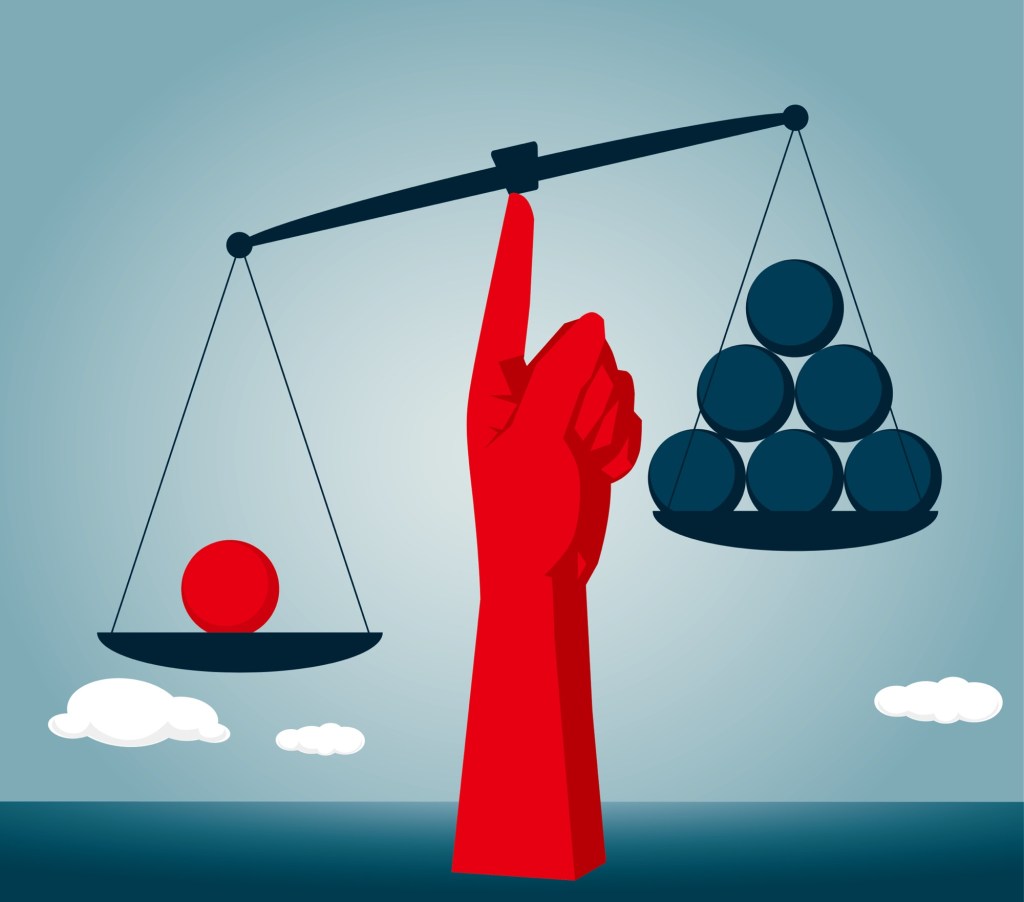
Economic growth is a goal that all nations strive to achieve; it is a statistic that allows governments to boast about success, and a commodity to measure the failures of a government itself. Economic growth can be defined as growth in real GDP, which is adjusted for inflation, so the value of goods and services of a nation or state should rise to have growth. Growth GDP is seemingly always a good thing. GDP helps economists comprehend the wealth of a nation; however, statistics showing high GDPs and High levels of GDP may be a façade. To truly understand how life for the average citizen may be in a nation, one must also consider inequality between the people residing in said nation. Inequality can be interpreted in two ways, one way is income inequality, the other is general wealth inequality, both are strongly affected by social factors such as ethnicity, region, gender etc. It is crucial for a successful nation to have as less inequality as possible, as a high GDP may not indicate that life for most people is comfortable or at least not stricken by poverty. In this essay, the situation of India will be discussed, due to its tremendous GDP and GDP growth rate, Think school (2025) notes that “India just hit the 4 trillion GDP mark” yet the nation suffers from extreme inequality between certain groups. To truly claim success in caring for its people, the governments of nations must use examples like India to maximize economic growth while addressing inequality amongst its citizens.
According to the International Monetary Fund (2025), the GDP of India in 2025 was 4.13 trillion USD, and its Real GDP growth was 6.6%. These numbers may seem like a cause for celebration as 4 trillion dollars would make India the fourth largest economy in the world. However, India’s massive population must also be considered, which drastically changes the narrative of how well the economy of India is doing. The same IMF report (2025) states that the GDP per capita in USD of India was merely 2.82 thousand dollars. This makes the country akin to nations such as Angola or Cambodia. An obvious explanation to this alarmingly low statistic may be attributed to the fact that India has the largest population in the entire world. The World Population Review (2024) notes that the population of India is around 1.5 billion people. but how can the nation achieve such high levels of growth yet still have so many suffer from relative and absolute poverty?
The relatively young and growing population of India promises to drive economic growth further in the coming years, but how can the nation grow so fast while yet continue to have so many suffer from poverty? To understand why the nation appears to be growing in wealth but citizens of India are not becoming much wealthier, one can look at the polices of two very different places in India, which reveal the true causes of wealth inequality, and the possible solutions to the issue. Bihar is often an extreme example of a state that has suffers from inequality. In contrast, the state of Kerala has a 94% literacy rate as announced by Wikipedia(2019), and Muhammad Riyaz(2025) repeats that “ Kerala had eradicated extreme poverty, making it the first state in India to do so”. How could these two regions differ so extremely in terms of wealth possessed by citizens? One explanation may be due to the high population of Bihar; however, one could argue the government could have used the large population to provide an advantage to Bihar if used well and with proper investment in education.
States such as Kerala and Tamil Nadu are known for high amounts of investment in education, resulting in higher productivity and more growth in the respective economies of the two states. Akanksha Saxena (2025) states “despite only being 20% of the Indian population, Kerela and Tamil Nadu contribute 35% of the national GDP”. Calvin Yang reveals Kerala’s efforts to help it’s residents in “Kerala’s poverty alleviation programme began in 2021 by identifying more than 64,000 families living in extreme poverty”. In contrast poverty in Bihar is reinforced by the existence of the rigid caste system that many are oppressed by in the state, often reflected in who holds powerful government positions. Many of those who reside in the state are denied the opportunity to progress in society due to their caste, resulting in a devastating poverty cycle where many can’t get access to education and therefore struggle to support their families and pay for their education. Conversely, India Today (2025) reports that in Kerela, “The government focused particularly on ensuring those without homes were offered help”, highlighting the indiscriminate polices of social investment which allowed Kerela to combat poverty.
One final reason why Bihar is less wealthy may be due to the rampant corruption that the officials of the state partake in. Mrityunjay Sharma (2024) claims “Aspects of Bihar’s society are much deeper and much more sinister than apparent “. Hasi Jain (2023) reports “Caste affiliations frequently influence political dynamics. Political parties often seek to appeal to specific caste groups to secure votes, leading to caste-based voting patterns. As a result, caste considerations often shape electoral outcomes and the composition of legislative bodies.” This phenomenon is exacerbated by the competitive nature of the state in national elections, resulting in funds being taken away from development and being spent during election campaigns. Many funds are also used up by giving “freebies” to those who vote for a certain party; however, this often is the worst type of welfare as rather than helping cultivate skills and development, it fosters a dependency culture amongst residents of Bihar.
Conclusively, balancing economic growth and reducing inequality is no easy task; however, with the correct investments in the people of the nation and a government that utilises funds well, welfare for the people can be achieved alongside rampant economic growth.
-Yashas Hans
 Fiscal Theory
Leave a comment